
Getting a tattoo in Japan is an exciting part of many travelers’ trips.
But if you are planning a longer session or getting tattooed on a sensitive area, you may already be wondering: Can I use numbing cream for a tattoo in Japan?
We receive this question a lot from international customers, especially from people who have used tattoo numbing cream in their home countries.
The short answer at Japan Tattoo in Shinjuku, Tokyo is:
We do not provide or apply numbing cream for tattoo sessions, and we ask customers not to use it.
Here is why.
What Is Tattoo Numbing Cream?
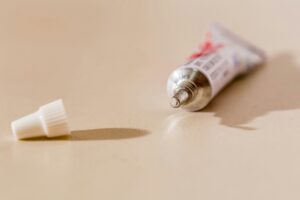
Numbing cream is a topical anesthetic applied to the skin to temporarily reduce pain and sensitivity.
Many products marketed for tattoos contain local anesthetic ingredients such as lidocaine. Depending on the country, product, concentration and intended use, these products may be regulated differently.
This is particularly important when traveling internationally: something that can easily be purchased or used in one country does not automatically have the same regulatory status in Japan.
Can You Use Numbing Cream for Tattoos in Japan?
Japan regulates medicines and medical practices differently from many other countries.
Tattooing itself is not automatically considered a medical practice in Japan; Japanese government materials discussing the Supreme Court’s 2020 tattoo decision specifically recognize the distinction between ordinary tattooing and medical practice.
However, anesthetic products are a separate issue from tattooing itself. The handling and use of pharmaceutical anesthetics can be subject to Japanese pharmaceutical and medical regulations, and certain acts involving medical judgment cannot legally be performed professionally by an unlicensed person.
For that reason, our tattoo artists do not provide or apply anesthetic/numbing cream as part of your tattoo service.
Please do not assume that because a particular numbing product is available overseas, it can automatically be used in the same way at a tattoo studio in Japan.
Why Our Tattoo Artists Prefer Working Without Numbing Cream
There is another important reason beyond regulations:
the tattoo artist needs to work with your skin.
Some tattoo artists report that certain numbing creams can temporarily change the texture or behavior of the skin.
Depending on the formulation and application, the skin may become softer, swollen, slippery or “spongy,” which can make it more difficult for an artist to stretch the skin and consistently deposit ink.
This does not mean that numbing cream universally “blocks tattoo ink.”
Available evidence and professional guidance do not support the blanket claim that correctly used lidocaine cream automatically prevents ink from entering the skin or ruins a healed tattoo.
The more accurate issue is that different products can change the working condition of the skin, and that can make the tattooing process more difficult for some artists.
For precision work, clean lines and consistent saturation, our artists prefer to work with skin in its natural condition.
Does Numbing Cream Affect Tattoo Ink?
This is one of the most common questions online:
“Does numbing cream make tattoo ink harder to put in?”
The answer is more complicated than simply yes or no.
The anesthetic itself does not appear to chemically “reject” tattoo ink. However, certain formulations. Particularly, oily products or products that significantly change the skin—may make the tattooing surface more difficult to work with.
An artist may experience:
- swollen or unusually soft skin
- difficulty stretching the skin
- increased moisture or plasma
- a slippery surface or residue
- difficulty achieving consistent saturation
- greater difficulty judging how the skin is responding
This is why two tattoo artists may have completely different opinions about numbing cream.
Their techniques, the product being used, the tattoo style and the customer’s skin can all be different.
Never Apply Numbing Cream Without Telling Your Tattoo Artist even if you are getting tattooed outside Japan.
If you are considering using numbing cream, ask your tattoo artist before your appointment.
Do not secretly apply it before arriving at the studio.
Your artist may be completely comfortable working with a particular product. Another artist may prefer you not to use it at all.
There may also be specific instructions regarding when—or whether—it should be applied.
Ultimately, your tattoo artist is the person who has to work with your skin for the next several hours.
Always ask first.
“But I Have a Very Low Pain Tolerance”
That’s completely okay.
You do not have to prove anything by suffering through your tattoo.
Instead of automatically reaching for numbing cream, talk to us about your concerns when planning your appointment.
Depending on the tattoo, we can consider factors such as placement, tattoo size, session length and breaks during the session.
A smaller tattoo or shorter session may be a much better option for someone who is particularly worried about tattoo pain.
And remember: pain varies enormously depending on the individual and placement.
How to Prepare for Tattoo Pain Without Numbing Cream
Your condition on the day of your appointment matters.
Before getting tattooed, we recommend that you:
sleep properly, eat a good meal, stay hydrated and avoid arriving exhausted or hungover.
Long sessions are much harder when you have not eaten or slept enough.
Wear comfortable clothing that gives your artist easy access to the tattoo placement, and let your artist know whenever you need a reasonable break.
FAQ: Tattoo Numbing Cream in Japan
Can I use numbing cream before a tattoo in Japan?
Do not use it without first checking with your tattoo studio and artist. At Japan Tattoo, our artists do not provide or apply anesthetic cream as part of tattoo sessions.
Is numbing cream illegal in Japan?
It is more accurate to say that anesthetic medicines and their professional use are regulated in Japan, rather than saying every product described as “numbing cream” is universally illegal. The legal status can depend on the product, ingredients, concentration and how it is supplied or used.
Does numbing cream stop tattoo ink from going into the skin?
Not necessarily. There is no good evidence that properly used numbing cream universally prevents tattoo ink from entering the skin. However, some products can temporarily alter skin texture or leave residue, making the skin more difficult for an artist to tattoo.
Can I put numbing cream on before arriving at the tattoo studio?
Please don’t do this without asking your artist first.
Even in countries where tattoo numbing creams are commonly used, your individual artist may not want to tattoo skin that has been numbed.
What if I am worried about tattoo pain?
Tell us before your appointment. We can discuss the tattoo’s placement, size and expected session length so you know what to expect.
Getting a Tattoo in Tokyo?
If you’re traveling to Japan and thinking about getting a tattoo in Tokyo, you are always welcome to talk to our team.
Japan Tattoo is located in Shinjuku-Gyoenmae, Tokyo, and we work with international customers every day. Our team can assist you in English with your tattoo consultation, design, appointment and aftercare.
Bookings and walk-ins are welcome.
No Comments Yet