
TL;DR — Read This Before Getting a Japanese Tattoo
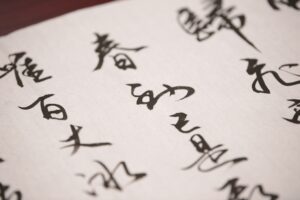
Many Japanese tattoo mistakes come from AI translations, Chinese character confusion, or dictionary-only meanings.
This guide explains the most common incorrect kanji, their correct Japanese meanings. And we introduce authentic calligraphy by the famous calligrapher who collaborate with Japan tattoo.
Japan Tattoo in Tokyo provides English consultation, cultural accuracy checks, and official calligraphy-based kanji designs for long-term clarity and meaning.
Why Japanese Tattoo Translation Mistakes Happen
Japanese kanji tattoos are globally popular because they appear minimal, symbolic, timeless and visually balanced.
However, visual beauty often hides linguistic and cultural errors.
Most incorrect tattoos originate from AI translation tools, online image searches, Chinese character references mistaken for Japanese or on-native tattoo flash designs.
Once tattooed, these mistakes become permanent and difficult to correct.
Most Common Incorrect Kanji Tattoos (And the Correct Meanings)
1. “Love” — Chinese-Style 愛 Without the Heart Component
Many visitors request 愛 (love) but bring a Chinese-style variation that removes the internal 心 (heart) element.
Appears visually similar but emotionally incomplete in Japanese context.
For a tattoo meant to symbolize love, structural accuracy is critical.
2. “Family” — Confusing 家庭 With 家族
A frequent translation mistake is using 家庭 to represent “family.”
Actual meanings
•家庭 → household / home environment
•家族 → family members / relatives
Using 家庭 changes the emotional meaning entirely and is semantically incorrect for most tattoo intentions.
3. “Peace” — Using 和 Instead of 平和
The character 和 is often chosen to mean peace.
Linguistic reality
•和 → harmony, balance, Japanese style
•平和 → true word for peace
While 和 is culturally positive, it does not directly express peace in modern Japanese usage.
4. “Never Give Up” — Literal AI Translation Errors
Some guests request phrases like:
決して放棄するな
This wording is grammatically possible but unnatural and overly formal, because 放棄 implies legal or formal abandonment and emotional nuance is lost.
Correct natural expressions
• 決して諦めない
• 諦めない
These reflect authentic spoken and written Japanese emotion.
Why Foreign Names Cannot Become Authentic Kanji
Foreign visitors often request kanji versions of their names.
However, we are not able to translate their names in Kanji characters because of linguistic limitation. Kanji represent: Meaning, Concept and Historical reading.
Kanji represent: Meaning, Concept and Historical reading.
Foreign names usually contain sound only, not Japanese meaning.
Correct Japanese writing system
Foreign names are written in katakana, used for: Non-Japanese words, International names and Imported vocabulary.
Artificial kanji name conversions produce invented meanings, Unnatural combination and Non-authentic Japanese text.
Therefore, true Japanese representation of foreign names is katakana.
The Risk of Relying on AI Translation for Tattoos
AI translation tools are effective for basic communication or general understanding.
But tattoos require cultural nuance, emotional tone, natural phrasing and long-term readability.
Approximate translation is not sufficient for permanent body art.
How Japan Tattoo Verifies Correct Meaning Before Tattooing
Every kanji tattoo request undergoes native Japanese speakers.
So we check grammar confirmation, cultural usage validation and aging and readability assessment.
Incorrect or unnatural designs are corrected or declined to prevent permanent mistakes.
Authentic Japanese Calligraphy Collaboration With Mika Okamoto
Japan Tattoo collaborates with professional calligrapher Mika Okamoto Featured Video — Watch the process here:
Calligrapher Mika Okamoto
is also responsible for the titles of famous Japanese films.She studied at a vocational school and developed her current style.
Her designs feature authentic brushwork, precise linguistic meaning, and balanced artistic composition, which you won’t find at other tattoo studios.
These designs are fundamentally different from designs downloaded from the internet, tourist reference images, or AI-generated kanji.
They have intentional cultural and artistic value.
Calligraphy Design Details
• Standard size: approximately 8 × 8 cm(Customization not available)
• Price: ¥60,000 + tax
• Customization not available
• Tattooing performed only by artists who completed official brush-stroke training under Mika Okamoto.
This ensures consistent reproduction quality, authentic calligraphic integrity and long-term visual clarity.
Why Correct Meaning Matters More Than Visual Style
A Japanese tattoo communicates language, culture and personal intention.
Incorrect kanji may appear attractive to non-Japanese viewers but seem unnatural or meaningless within Japan.
Accuracy preserves both personal symbolism and cultural respect.
How to Choose the Right Kanji Tattoo Before Your Japan Trip
Before deciding:
• Do not rely solely on AI translation
• Verify meaning with native professionals
• Avoid Chinese character substitutions
• Understand nuance beyond dictionary definitions
• Choose authenticity over trend
A tattoo should remain meaningful years after your visit, not only on the day it is created.
English Consultation Available in Tokyo
Japan Tattoo provides:
• English-language consultation
• Native-level kanji verification
• Culturally accurate design guidance
• Long-term readability planning
This ensures clarity for international travelers receiving tattoos in Japan.
Plan Your Tattoo Before Traveling to Japan
Peak travel seasons fill quickly.
Advance consultation is recommended to secure:
• Correct design preparation
• Artist availability
• Safe healing schedule during travel
Walk-ins may be possible depending on availability.
Final Advice
A Japanese tattoo should represent true meaning, not translation error.
Accuracy at the beginning prevents regret in the future.
Consultation and Booking
Choose authentic meaning, professional verification, and genuine calligraphy.
Plan your kanji tattoo with Japan Tattoo in Tokyo.
No Comments Yet